September 30, 2026

3
min read
What 1,000 Tracked Competitors Tell Us About Website Changes (Infographic)
Competitors Change Their Sites 20x a Month. Here's the Data.


Competitors Change Their Sites 20x a Month. Here's the Data.
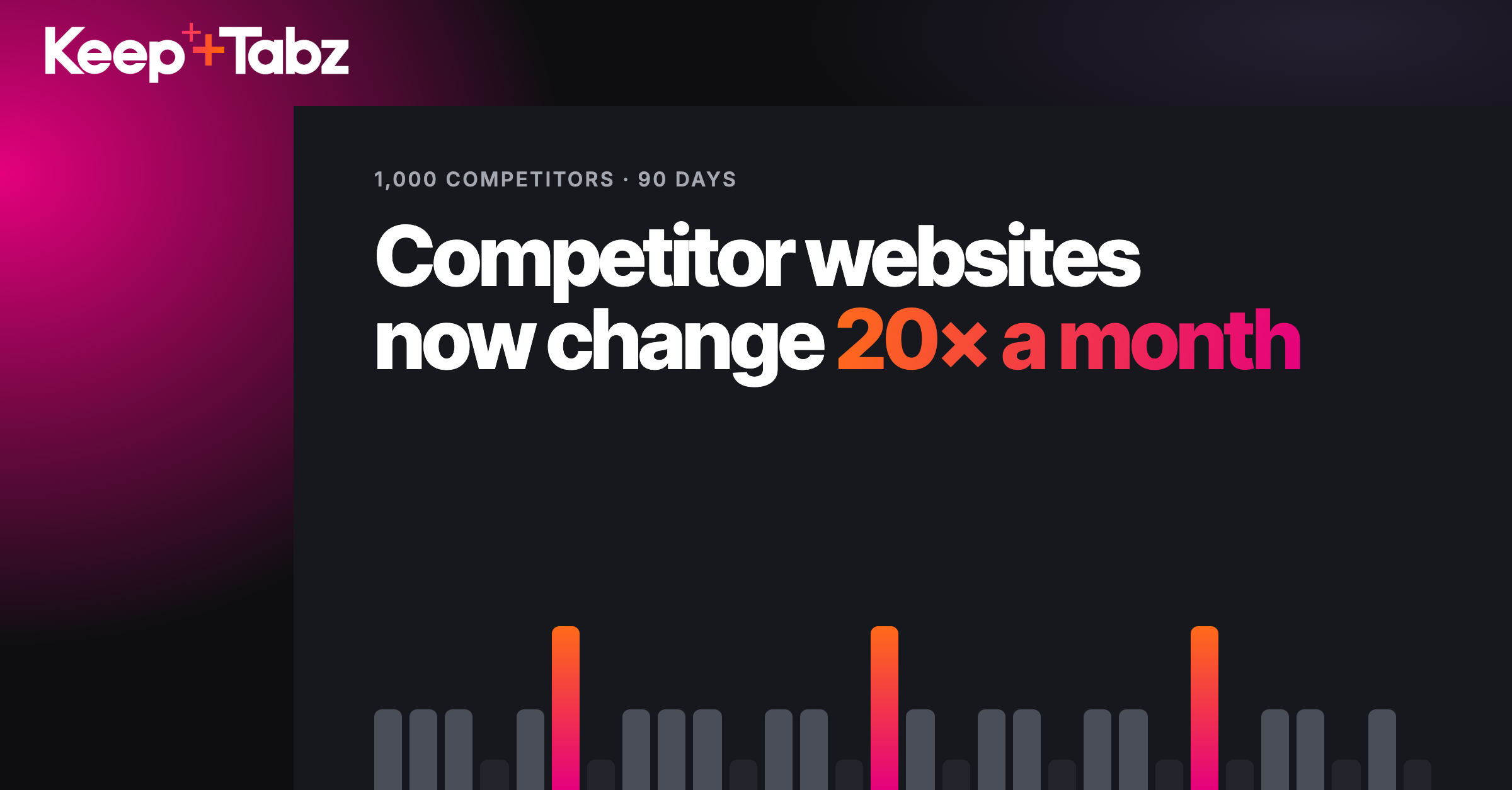
We just crossed 1,000 competitors tracked for KeepTabz customers. For a four-person team that's a fun number to hit, but the more useful part is what those 1,000 companies have been doing to their websites.
I pulled the last 90 days of change data expecting some movement. There was a lot more than some. Marketing teams are shipping changes to their public pages at a pace that would have been hard to staff a few years ago, and I think AI is the main reason why.
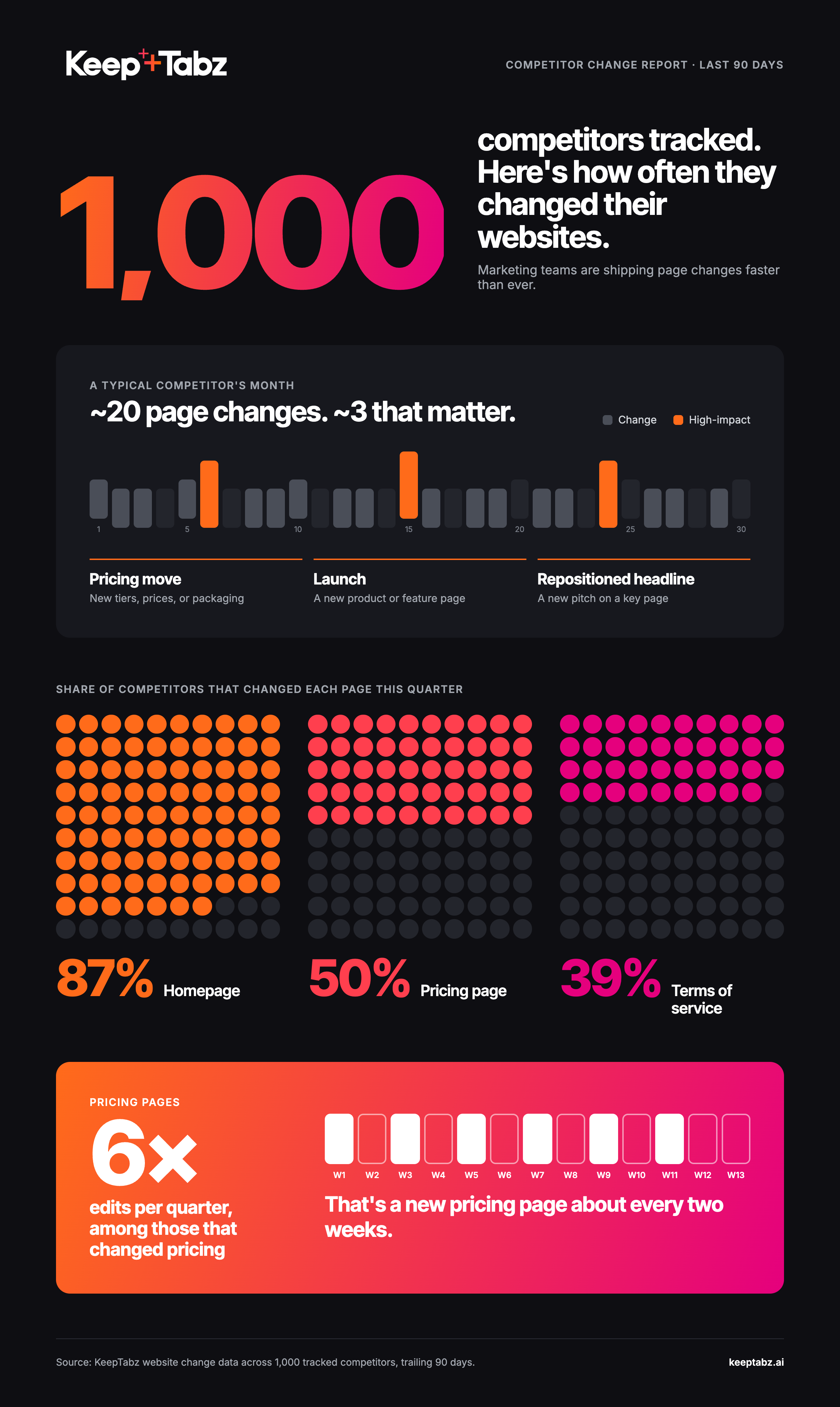
Across the 1,000 competitors we track:
The pricing number is the one I keep coming back to. Six edits in a quarter isn't a company finalizing a price. It's a company testing tier names, what goes in the middle plan, whether the annual discount is 15% or 20%. If you sell against that company, each of those edits changes the conversation your reps are walking into.
The terms of service number surprised me too. ToS pages used to change when legal got around to it. I'd guess a good share of those edits are about AI and data use, though I haven't broken that out yet.
Changing a homepage used to mean a copywriter, a designer, a round of reviews, and a dev ticket. Now a product marketer can draft five headline variants in ten minutes, push them live from a no-code CMS, and let a testing tool pick the winner by Friday. When a page change costs close to nothing, teams change pages constantly.
That's great for them. It's a problem for anyone whose read on the market comes from a quarterly review. If you check a competitor's site once a quarter, you're only seeing one frame of a film. You might land on their pricing page the week they were running a test and walk away with the wrong idea about their whole strategy.
This is the problem we built KeepTabz to solve, so I'm biased. It watches the pages you pick, flags what changed, and scores which changes are likely to matter, so you aren't reading 20 diffs a month per competitor.
You can also run a scrappy version with a spreadsheet and a weekly calendar reminder. Whichever way you go, get off the quarterly cadence. Your competitors already have.