May 23, 2026

30
min read
10 Best AlphaSense Alternatives & Competitors [2026]
A breakdown of the strongest AlphaSense alternatives in 2026, including full-suite competitive intelligence platforms, specialized tracking tools, and DIY options.
![10 Best AlphaSense Alternatives & Competitors [2026]](https://cdn.prod.website-files.com/68100b769b154c0a404922e6/690fc0df354fc80ec6e11624_headshot1.png)

A breakdown of the strongest AlphaSense alternatives in 2026, including full-suite competitive intelligence platforms, specialized tracking tools, and DIY options.
![10 Best AlphaSense Alternatives & Competitors [2026]](https://cdn.prod.website-files.com/68100b769b154c0a404922e6/6a122115bb084731fed4db73_KeepTabz-Guide-Header-AlphaSense.png)
The strongest alternatives to AlphaSense for competitive intelligence in 2026 are KeepTabz, Contify, Crayon, Klue, Kompyte, Meltwater, Similarweb, Perplexity / ChatGPT Deep Research, and Google Alerts. They split into three groups: purpose-built CI platforms that fit the workflow better than AlphaSense, specialized tools that cover one slice of what AlphaSense does, and free or DIY options for teams with no tooling budget. (For takes on adjacent primaries, see our companion pieces on Klue alternatives and Crayon alternatives.) The right choice depends on which slice of AlphaSense's product surface you actually need to replace.
AlphaSense was built for financial research — SEC filings, broker research, and the 150,000+ expert call transcripts from the $930M Tegus acquisition. But a meaningful share of AlphaSense customers use it for competitive intelligence on B2B SaaS markets, where the financial-document surface area doesn't quite fit. If that's your situation, these four platforms are purpose-built for CI and may map to your workflow better. KeepTabz is our pick of the four, and we'll explain why honestly enough that you can decide for yourself.
Best for: B2B SaaS marketing, product marketing, sales, and CRO teams who picked AlphaSense for competitive intelligence and realized they need ads, reviews, social posts, and website-change signal — the surface area AlphaSense doesn't cover.
Similar to: Contify, Crayon, Klue, Kompyte.
KeepTabz is an AI-powered competitive intelligence platform built for the B2B SaaS teams who need a different shape of data than AlphaSense provides. It tracks every move your competitors make — news, G2 / Capterra / TrustRadius reviews, LinkedIn and X social posts, website changes, pricing shifts, ad campaigns, SEO and PPC performance — scores each update for competitive importance, and delivers the highest-impact items as a daily digest in Slack, Microsoft Teams, Discord, or email. Setup takes 48 hours with a human QA check on every account.
Heads up: KeepTabz is our platform. The goal of this section is an honest comparison, not a one-sided pitch. If a different tool below fits your situation better, that's the one we'd point you to.
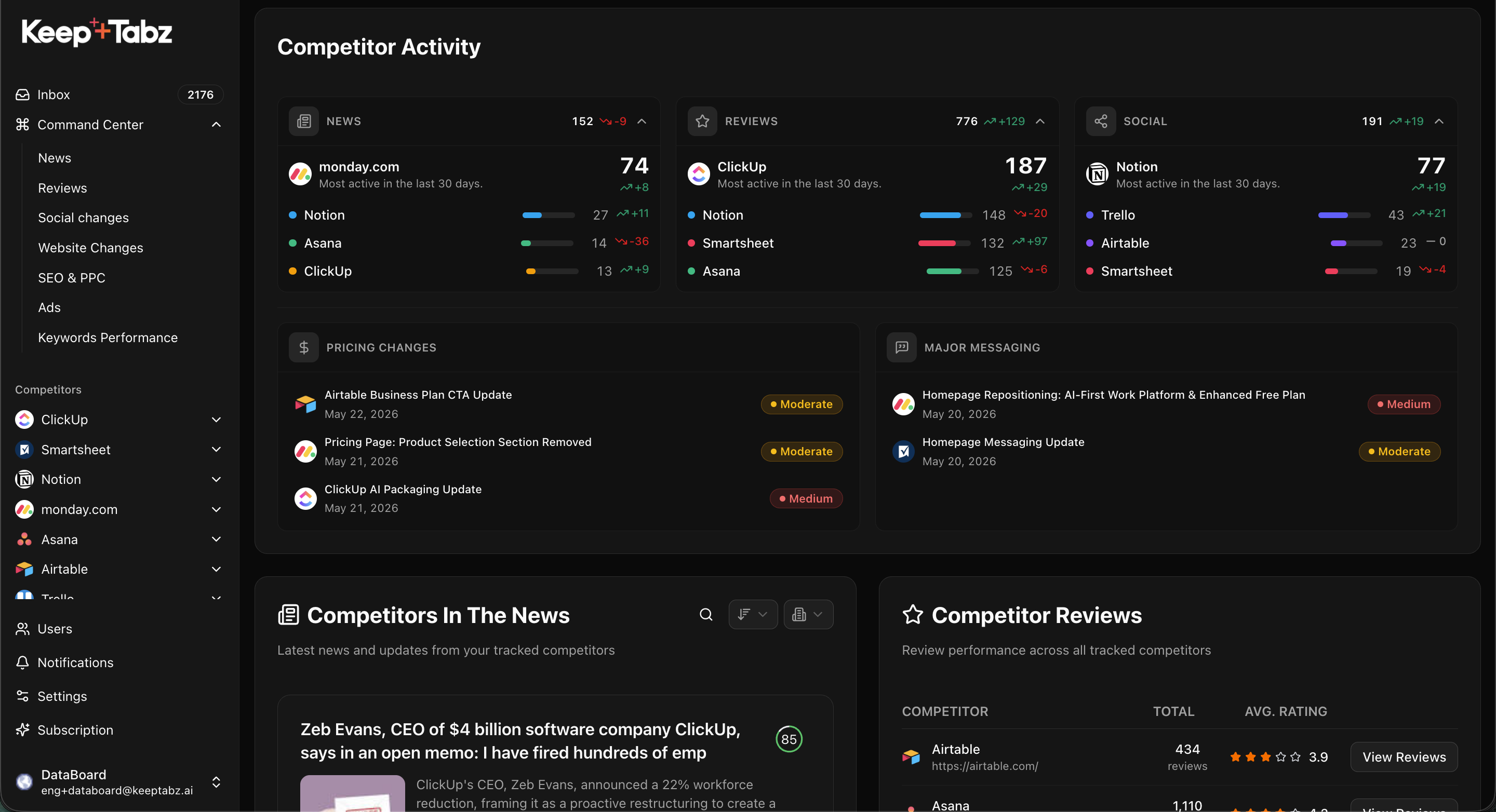
AlphaSense is genuinely the deepest tool on the market for SEC filings, broker research, and expert call transcripts via Tegus. What it isn't built to do is track the surface area where most modern B2B competitive signal actually lives: G2 / Capterra / TrustRadius reviews, LinkedIn and X executive posts, competitor ad libraries on Meta and Google, week-over-week website changes on pricing and product pages, and SEO/PPC performance shifts. Those sources are thinly covered in AlphaSense, but they're where 80%+ of B2B competitive signal actually moves.
KeepTabz is purpose-built around exactly those sources. It pulls reviews from all five major review sites and elevates the ones that point to product gaps. It tracks competitor LinkedIn and X posts, both company accounts and executive accounts, and surfaces messaging shifts. It snapshots competitor websites on signup and re-checks them on an ongoing basis to surface pricing changes, new product launches, and partner deals. It pulls actual ad creative from Meta and Google ad libraries. Current customers include Netlify, BigPanda, Mixmax, eSkill, TrueDialog, OpenLane, NonprofitsHQ, and RentBamboo — mid-market and SMB B2B SaaS teams using KeepTabz for exactly the competitive surface AlphaSense doesn't cover.
AlphaSense's Generative Search and Workflow Agents are genuinely impressive at synthesizing financial filings and expert calls. KeepTabz takes a different approach for a different surface: every news article, review, social post, website change, and ad gets scored 0–100 for competitive impact with a transparent rationale, and the daily digest only surfaces signals above an impact threshold. The agents are trained on real CI reasoning grounded in the founding team's 20 years of B2B marketing experience at Dell, IBM Watson, Rackspace, Sisense, and Alloy.
The practical result is that the noise drowning Google Alerts and lighter monitoring tools — articles that mention a competitor's name in passing, recycled press releases, low-impact social posts — gets suppressed automatically. What rises to the top is what a senior CI analyst would actually flag: pricing-page changes, funding rounds, partner deals, executive social posts that hint at strategy shifts, and review patterns that point to product gaps. Every score is inspectable.
AlphaSense's distribution model is built around analyst seats — researchers log into the platform, run searches, and write briefings. That's the right model for equity research and corp dev workflows. It's the wrong model for product marketing, CRO, and founder use cases, where the team isn't going to log into a CI tool daily. KeepTabz's daily digest meets the team where they already work: three highest-scoring updates per day, delivered to the Slack / Teams / Discord channel they already scroll. "I love how the Slack daily digest directs my eye right to what matters most," says Kelsey Waters, CEO of OpenLane. "Whether it's a critical website update or a new social post, I can see the most important news at a glance and ignore the rest."
Set-it-and-forget-it isn't marketing language — it's the actual workflow. You don't log into KeepTabz to get value; the value comes to you. Anything urgent (a competitor changes pricing, launches a new ad campaign, gets named in a major news story) fires a special alert outside the daily cadence.
AlphaSense's API is enterprise-only and gated behind premium tiers. KeepTabz ships a Model Context Protocol (MCP) server and full API that turns your competitive data into a building block for the AI agents your team is already creating in Claude, ChatGPT, Claude Code, Zapier, Make, or n8n. Connect to one API instead of fifteen.
Real things current customers have built on top of it in the last few weeks: pull website-change history for a competitor set and ask the LLM what those shifts say about messaging direction; upload an existing battle card and ask "what changed in the last month that we should update?" and get a refreshed card back; pull every ad a competitor is running and generate a full ad teardown (messaging themes, offers, personas, channel mix); build a competitive takeout campaign powered by all the bad reviews KeepTabz has collected for a target competitor. These aren't roadmap items. They're current customer workflows.
AlphaSense is genuinely great at what it's built for. The breadth of premium content — SEC filings, broker research, regulatory filings, and the 150,000+ expert call transcripts from the Tegus acquisition — is unmatched in a single search interface. Generative Search and Workflow Agents reduce hours of manual analyst work per primer. The product is used by 90% of the S&P 100 and 70% of the S&P 500 for a reason. If your job is to model markets, write equity research, or run corp dev landscape analyses, AlphaSense is the right answer and nothing else really competes.
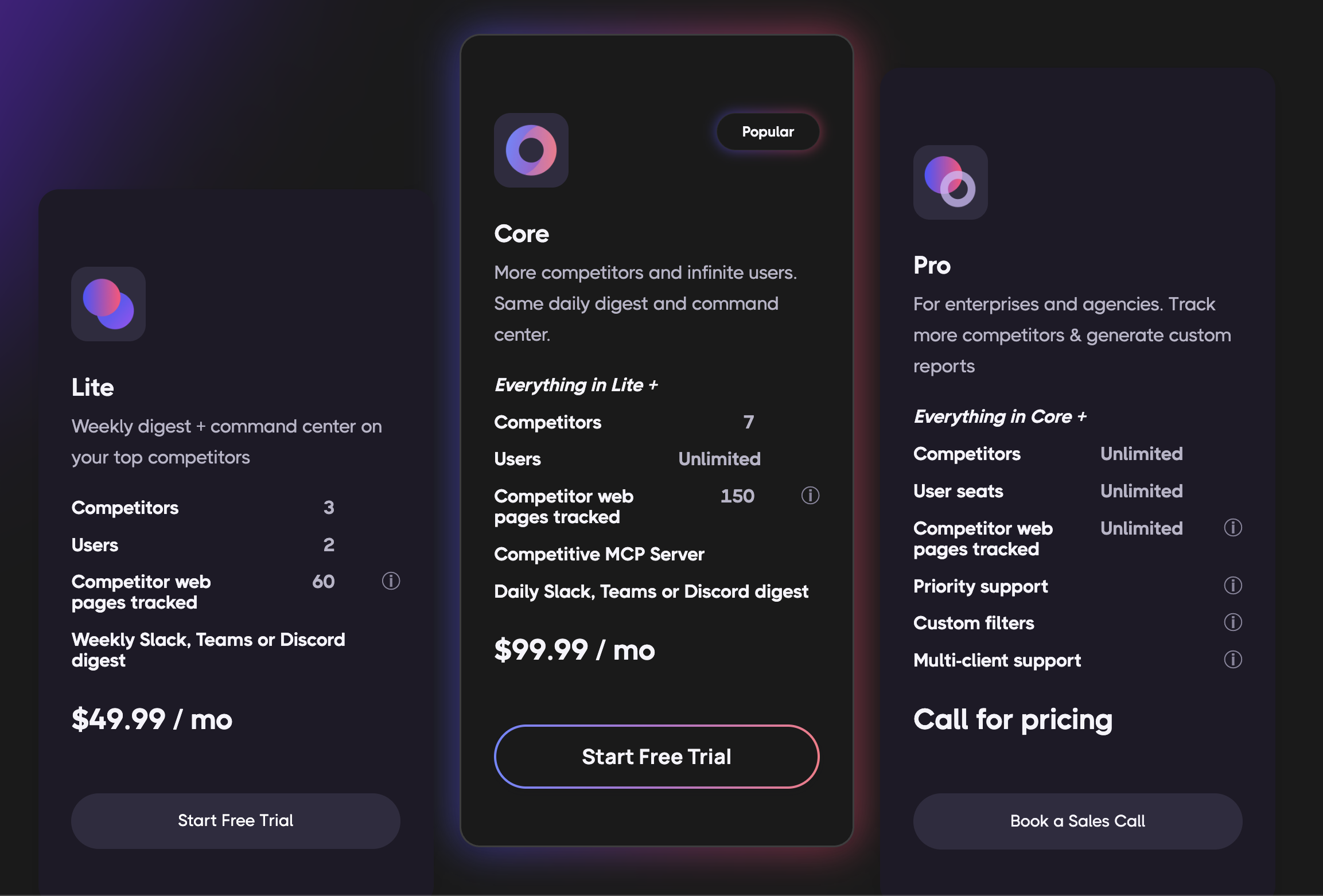
The difference is who the product is built for. AlphaSense's pricing (a typical three-seat enterprise deployment lands around $45K–$60K annually; adding Tegus pushes total spend to $120K+; largest customers run $1M+/year), platform-bound workflow, and financial-research source mix all assume an analyst-style user. KeepTabz is built for the B2B SaaS marketing, product marketing, and CRO teams who picked up AlphaSense looking for competitive intelligence and discovered it doesn't track the sources that matter to them — competitor ads, reviews, social posts, website changes, and SEO performance. It's priced so a 10-person startup can afford it on a marketing budget ($49.99/mo for Lite, $99.99/mo for Core), and the daily digest meets the team where they actually work.
Pricing is published on the KeepTabz site — no "contact sales" gating, no demo required to see the numbers.
Best for: Global enterprise market-intelligence and strategy teams (banking, IT services, pharma) that need multilingual news and PR aggregation, AI-driven research across thousands of accounts, and the analyst-credibility of being named a Gartner Visionary.
Similar to: AlphaSense, Klue, Crayon.
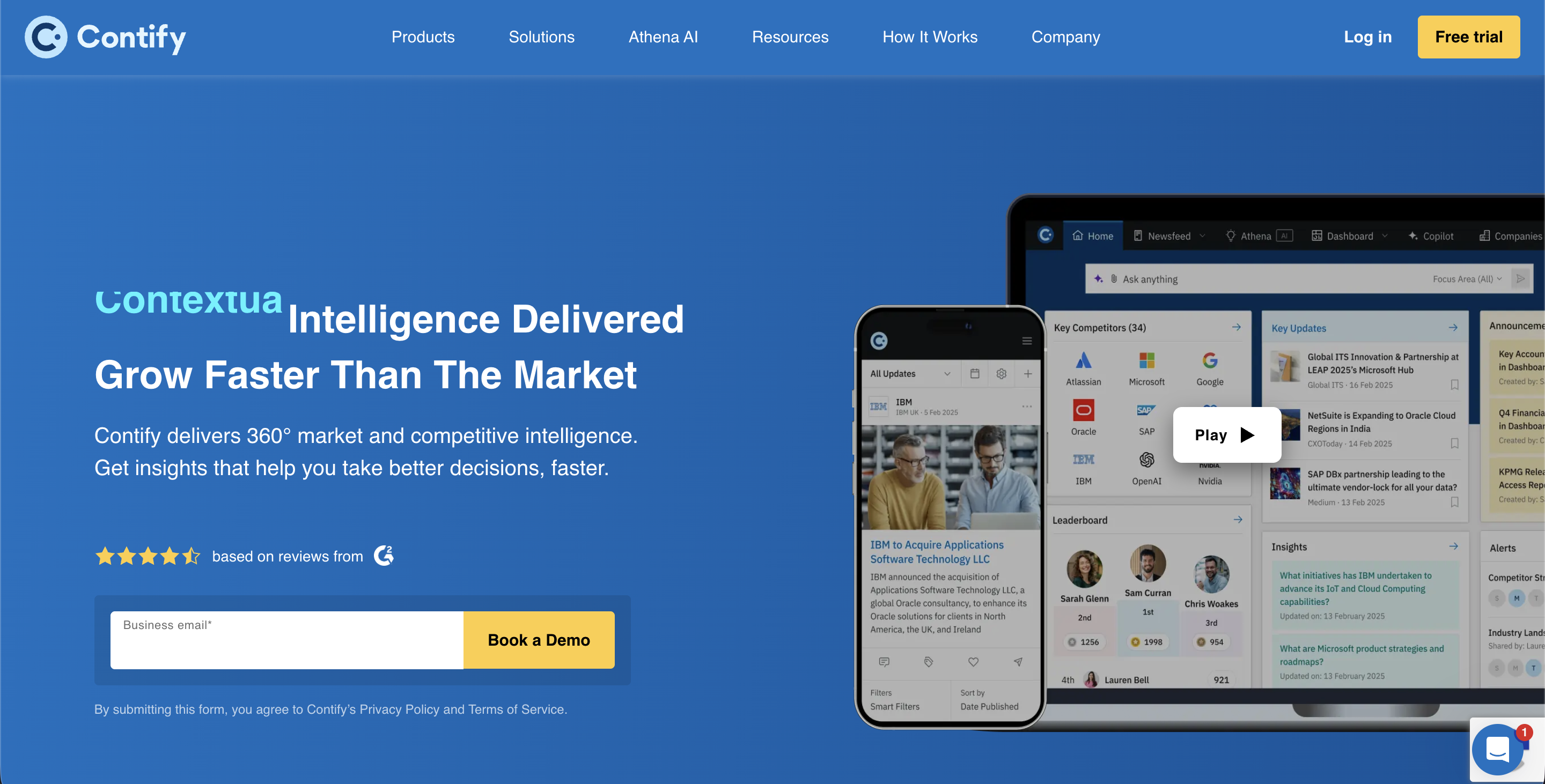
Contify is the closest direct peer to AlphaSense on the dimensions of multilingual news aggregation, AI-driven research, and enterprise market intelligence framing. The platform pulls from more than 1 million vetted sources — news wires, SEC filings, regulatory portals, job boards, and broker research — across 117+ languages with auto-translation, and applies a user-defined custom taxonomy of entities, signals, and topics to classify everything. The 2025–2026 product push is Athena AI, an agentic AI engine that answers ad-hoc questions over the curated intel layer — similar in spirit to AlphaSense's Generative Search but priced and positioned for market intelligence teams rather than equity research.
Contify was named a Visionary in the inaugural 2026 Gartner Magic Quadrant for Competitive and Market Intelligence Platforms — a material analyst-credibility win and a strong signal that Contify is a serious enterprise option, not just a regional player. If you're shopping AlphaSense specifically because you need a Gartner-recognized market-intelligence platform with multilingual depth, Contify is the swap that maintains analyst credibility.
Versus AlphaSense, Contify's focus is market and account intelligence first (news, PR, regulatory feeds across thousands of entities) rather than financial documents and expert calls. AlphaSense leans into the equity-research-and-corp-dev use case; Contify leans into the strategy-and-market-intelligence use case. The two compete in the same RFPs more than any other tools on this list.
Contify does not disclose pricing publicly. Quotes are custom-built based on the number of companies tracked, deliverables, user seats, and feature set. Comparable enterprise market-intel deployments at this scale typically land in the $20K–$60K/yr range based on Capterra and TrustRadius listings, but Contify itself does not publish tiers.
Best for: Mid-market to enterprise compete teams that already run formal win/loss and want automated battlecards pushed into Salesforce, Slack, and Highspot at a $20K–$100K/yr ACV.
Similar to: Klue, Kompyte, KeepTabz.

Crayon sits at a different center of gravity than AlphaSense. Where AlphaSense is built for analysts modeling markets via SEC filings and expert calls, Crayon is built for product marketers arming sales reps with battlecards in Salesforce and Slack. The headline product in 2025–2026 is Sparks AI, a battlecard-refresh agent that auto-generates competitor analyses across 7M+ tracked sources and pushes updates directly into Salesforce, Slack, Highspot, and Seismic. Crayon also publishes the annual State of Competitive Intelligence report, now in its 8th edition and the most-cited research in the category.
Versus AlphaSense, Crayon's focus is product marketing and sales enablement rather than financial research. If your AlphaSense use case is really "we want battlecards and competitor activity for our reps," Crayon maps to that workflow more directly — and at a price point materially below typical AlphaSense + Tegus deployments. Crayon also shipped an MCP server in 2026 for external AI interop, which narrows what was once a meaningful API gap.
Crayon does not disclose pricing publicly. Third-party estimates via Vendr put typical mid-market deployments in the $20K–$40K/yr range, with smaller teams landing closer to $15K and larger enterprise rollouts pushing past $100K once add-ons are included.
Best for: Fortune 500 product marketing teams with a dedicated competitive intelligence analyst and a Salesforce-centered sales motion, willing to invest mid-five to low-six figures annually on a fully-staffed enablement platform.
Similar to: Crayon, Kompyte, KeepTabz.

Klue is the largest sales-enablement-focused CI platform on the market. The 2026 product surface includes the flagship Battlecards module (AI-generated, Salesforce-embedded, deal-context-aware), Klue Win-Loss (a separate SKU added via the Goldpan acquisition in March 2025), the Knowledge Hub for centralized intel, and the new Compete Agent — an AI agent that auto-researches competitors and pushes deal tips to reps' inboxes. The Compete Agent is the closest direct analogue on this list to AlphaSense's Workflow Agents, applied to a sales-deal context rather than an equity-research one. Klue also expanded into product launch and GTM planning with the Ignition GTM acquisition in September 2025, broadening beyond pure CI.
Versus AlphaSense, Klue's focus is arming individual sales reps in individual deals rather than supplying analysts with research material. The two products rarely compete in the same RFP — but if your AlphaSense use case has crept into sales enablement ("can we get this in front of our AEs?"), Klue is the more native answer to that workflow.
Klue does not disclose pricing publicly. Third-party sources via Vendr and PricingNow put typical mid-market deployments in the mid-five-figure range and large enterprise rollouts at $80K–$150K+ per year with 50+ seats. Tiers are Essentials, Professional, and Enterprise — per-user with volume discounts. Klue Win-Loss is a separate line item.
If AlphaSense's full surface is more than you need and you only want one specific slice — automated battlecards at SMB pricing, enterprise news and social monitoring, or deep web-traffic and SEO intelligence — these three specialized tools each cover that single capability at a fraction of the price. The trade-off is what you'd expect: you'll need a second tool if you also need the slices the first one doesn't cover.
Best for: SMB and lower mid-market teams who want unlimited battlecards and Kompyte GPT generative analysis at a fraction of enterprise pricing.
Similar to: Crayon, Klue, KeepTabz.

Kompyte is the most accessible entry point in the named-CI category by price. The product covers live tracking of competitor websites, social posts, reviews, content, and job listings; AI filters and workflows that tag and route competitor signals; and unlimited battlecards on every tier. Kompyte was acquired by Semrush in March 2022 and integrates tightly with Semrush's SEO and PPC data.
A bigger question hangs over Kompyte in 2026: Adobe announced the $1.9B acquisition of Semrush on November 19, 2025, and the deal closed April 28, 2026. Kompyte is now an Adobe-owned asset under the Experience Cloud umbrella. Public roadmap signals from Adobe so far emphasize Brand Visibility and Generative Engine Optimization rather than standalone CI, and feature-release cadence has visibly slowed compared to Crayon and Klue over the last six months. Buyers should weigh that uncertainty.
Versus AlphaSense, Kompyte's focus is sales-enablement battlecards rather than financial research — different audience, different workflow. Kompyte's real wedge is price: it starts roughly an order of magnitude lower than any other named CI platform and bundles unlimited battlecards and user seats on every tier. If the strategic risk of an Adobe-owned roadmap doesn't bother you, Kompyte is the cheapest credible CI swap on the market.
Best for: Enterprise PR, comms, and brand teams that need broad news, social, broadcast, podcast, and influencer monitoring in one suite — and have $25K–$70K+/yr in budget for it.
Similar to: Cision, Brandwatch, Talkwalker, Onclusive.
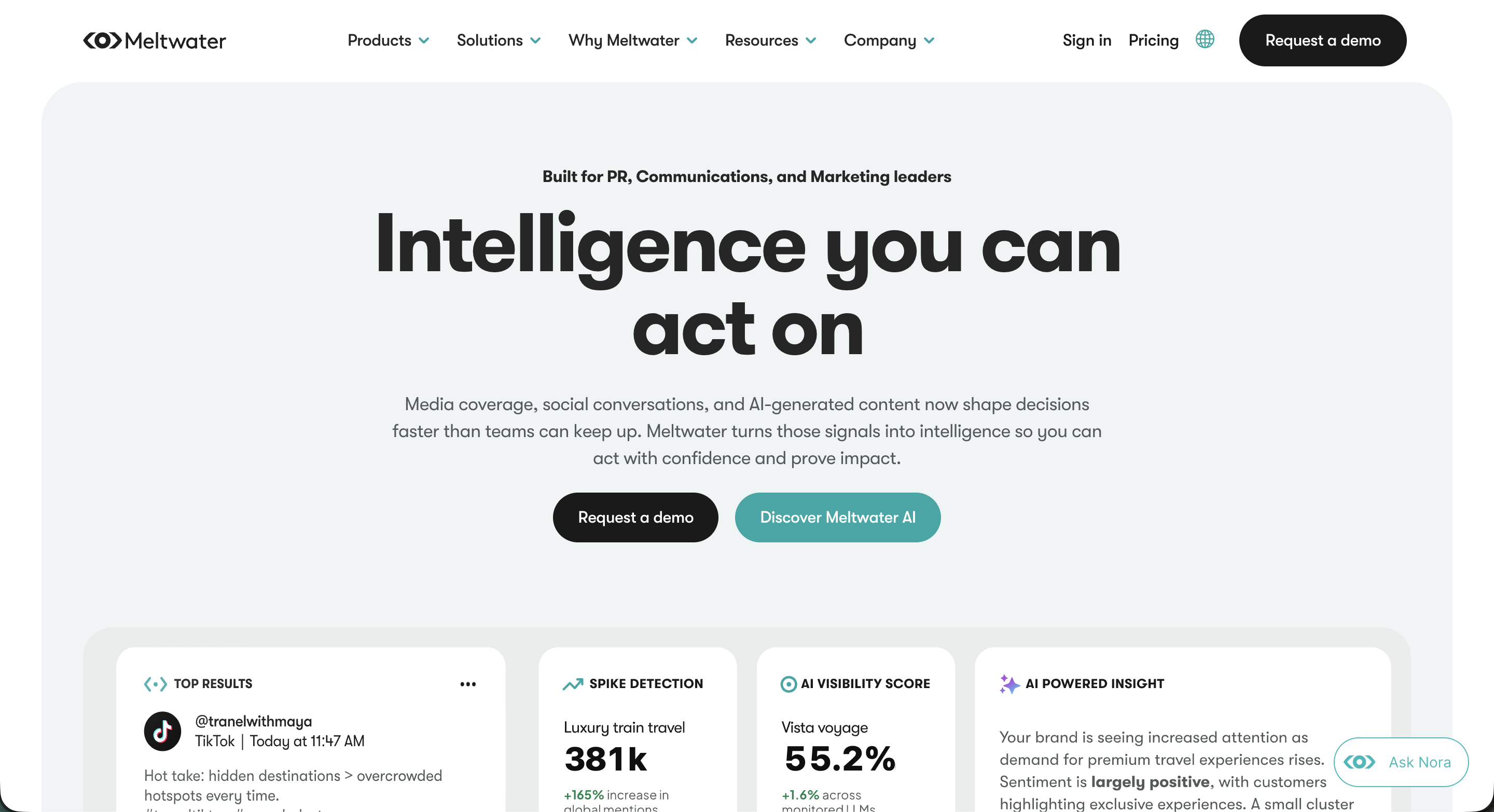
Meltwater is the deepest combined news + social + broadcast monitoring suite on the market. The platform covers 200B+ social conversations across 300M+ profiles, global news and print, broadcast and podcast monitoring, and influencer marketing (via the Klear acquisition). The Owler acquisition in 2021 added competitor firmographic and news depth that most legacy PR tools lack. 27,000+ customers globally.
Meltwater was taken private in August 2023 by Marlin Equity Partners and Altor for roughly $700M, with Verdane adding a $65M minority investment in December 2023. 2025–2026 highlights include becoming an official Reddit data partner in February 2026 (which materially expands their social coverage into one of the LLM-blocked surfaces most other CI tools can't see), and a continued expansion of their AI feature set including Boolean-building agents and narrative summarization.
Versus AlphaSense, Meltwater pulls news, social, broadcast, podcasts, and influencer data for PR and brand teams — the opposite end of the "intelligence" market from AlphaSense's SEC filings, broker research, and expert calls. If your AlphaSense use case is really brand and reputation monitoring rather than financial research, Meltwater is built for that and AlphaSense isn't.
Meltwater does not disclose pricing publicly. Third-party data via Vendr puts the median contract around $25K/yr, with Suite plans landing $15K–$40K and Enterprise rollouts $40K–$100K+. SMB averages ~$16,200; Enterprise averages ~$69,650. Annual contracts are standard, with 3–7% YoY escalators common.
Best for: Marketing, SEO, and digital-intelligence teams who only need competitor web traffic, keyword, and ad benchmarks — not financial filings, expert calls, or battlecards.
Similar to: Semrush, Ahrefs, SpyFu.
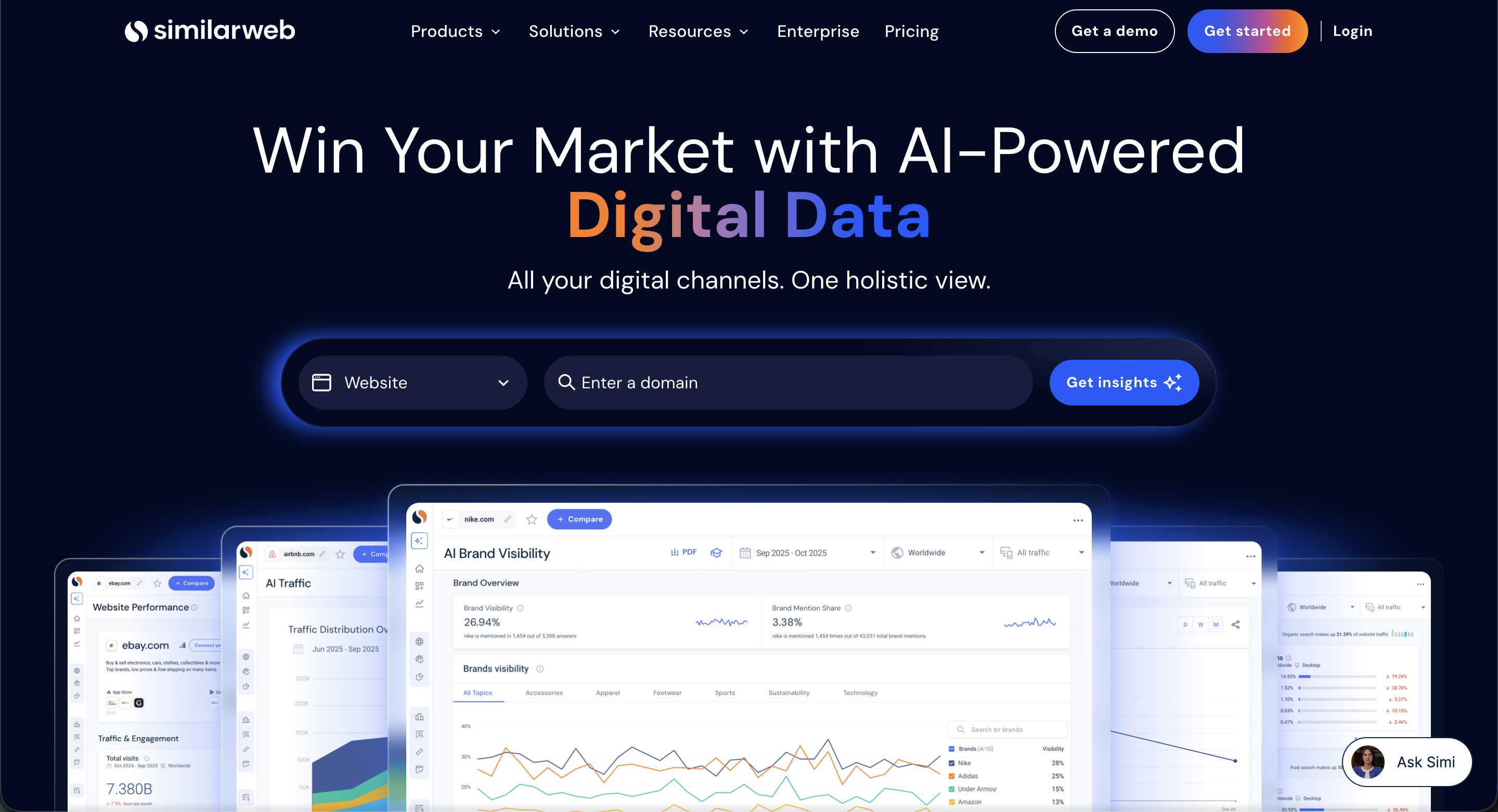
Similarweb (NYSE: SMWB) is the deepest external web-traffic and digital-intelligence dataset on the market for any site you don't own. The platform covers traffic, engagement, audience benchmarks, paid and organic keyword data, and tech-stack signals across 100M+ websites. The 2026 product push has been heavy on AI: the Gen AI Intelligence module tracks brand visibility and referral traffic from ChatGPT, Gemini, and Perplexity, and AI Studio (launched February 2026) is a natural-language enterprise agent over Similarweb's full data graph. They also acquired The Search Monitor in April 2025 for real-time competitive ad intelligence.
Versus AlphaSense, Similarweb's focus is digital marketing performance rather than financial documents. If the question you're answering with AlphaSense is "why is competitor X's organic traffic up 40% this quarter," Similarweb will answer it and AlphaSense won't. If the question is "what's in competitor X's last earnings call," AlphaSense will answer it and Similarweb won't. The two are complementary for many B2B teams, not direct alternatives.
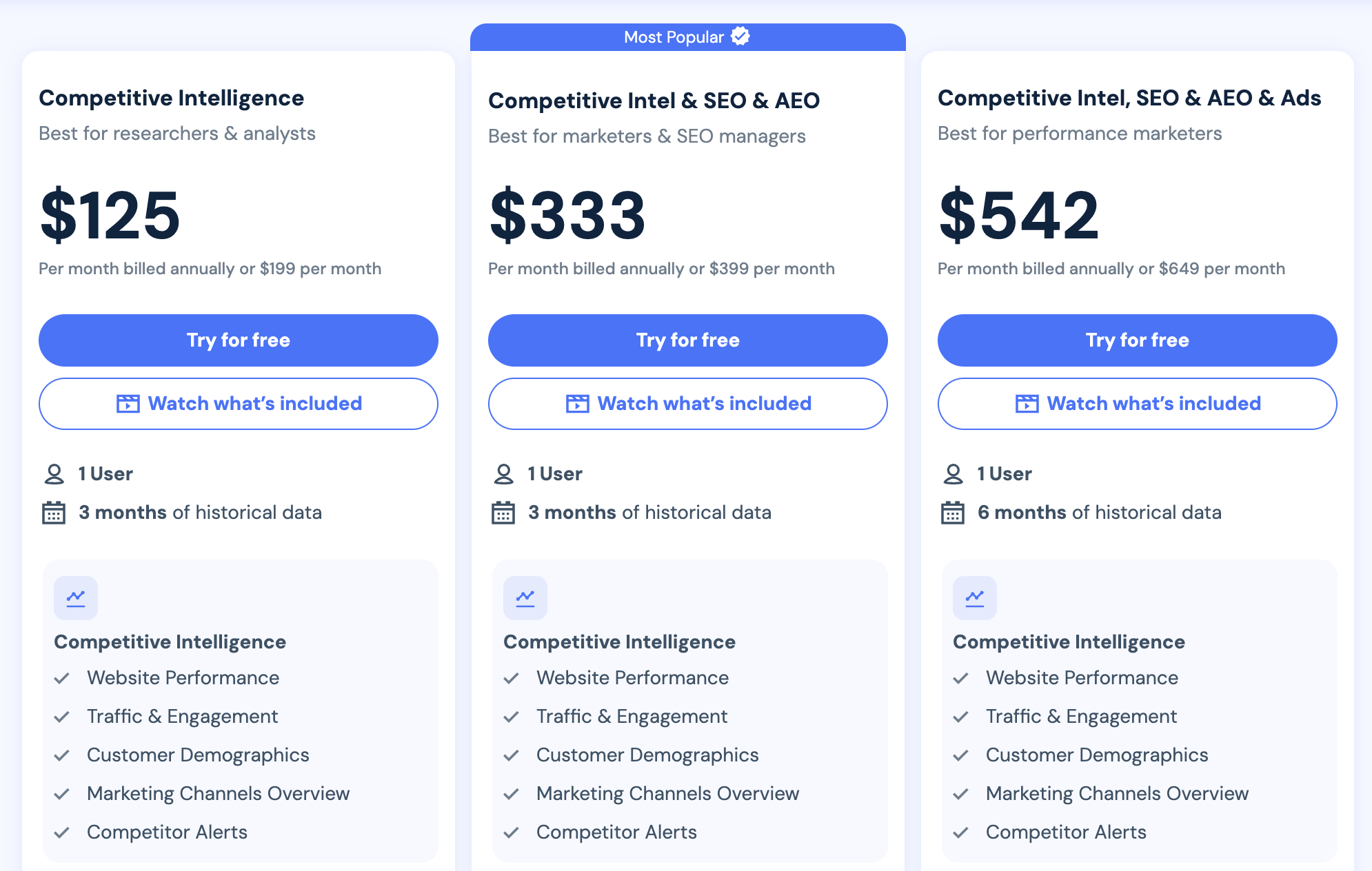
AlphaSense's premium pricing makes the budget question a real one. If you can't justify $45K–$120K/year for competitive intelligence, these two free or near-free paths are credible starting points. Both have real limitations on coverage, accuracy, and alerting — but it's useful to understand exactly what each gives you (and gives up) before assuming a paid platform is the only option.
Best for: Strategists and operators who want one-shot, citation-backed deep dives on a specific competitor or market question and don't need always-on monitoring.
Similar to: Claude Research, Gemini Deep Research, You.com Research.
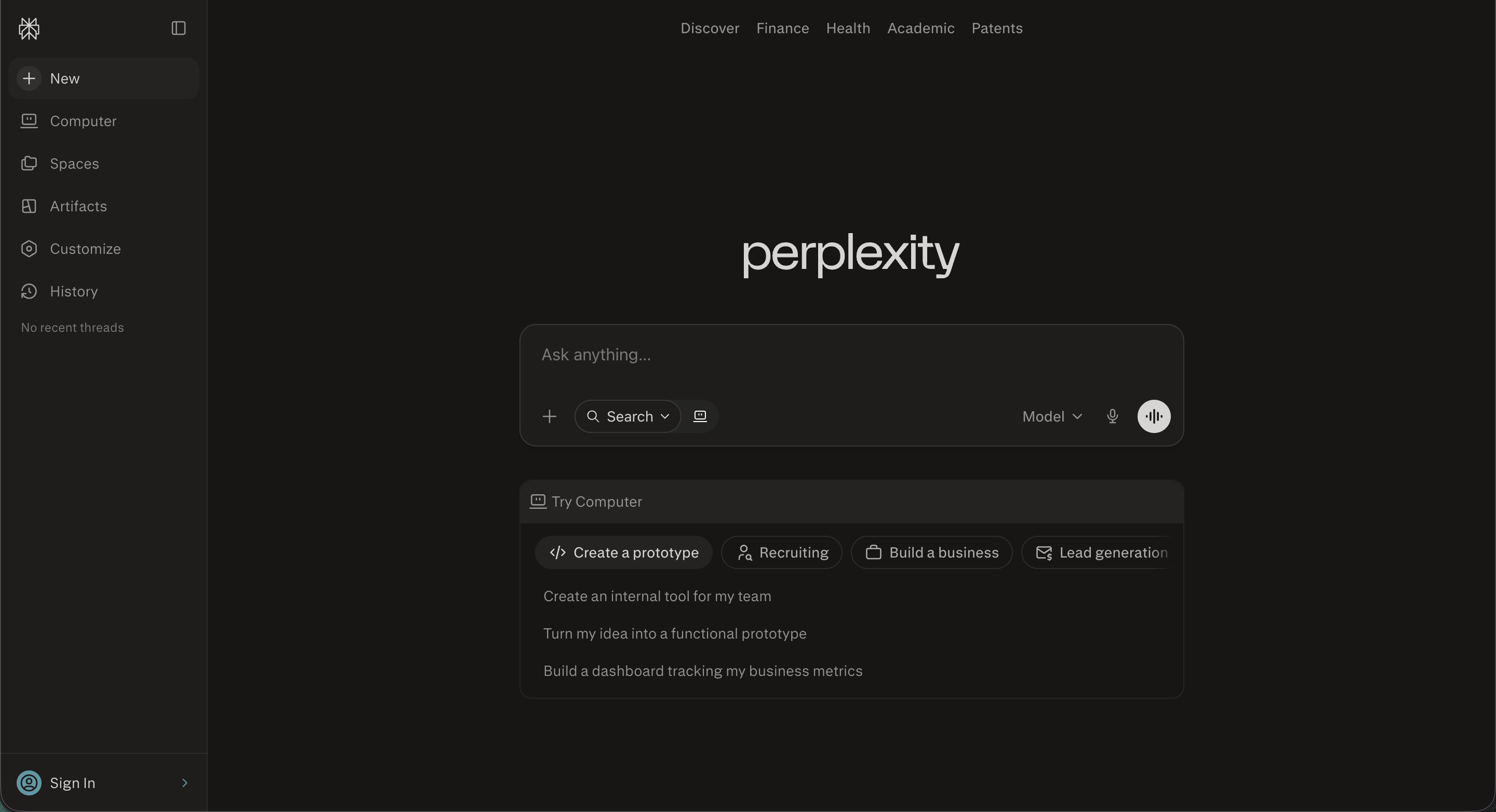
The AI deep-research products from Perplexity and ChatGPT — both available at $20/mo on Pro / Plus tiers, and $200/mo on higher-usage tiers — plan, search, and synthesize across dozens of public sources to return long-form competitor briefs with inline citations. Perplexity runs in 2–3 minutes per report; ChatGPT runs 5–30 minutes for deeper passes. For a one-off "give me a primer on competitor X" question, both are dramatically faster than manual desk research at roughly 1/100th of an AlphaSense seat license.
Versus AlphaSense, the catch is real. AlphaSense runs continuously over premium licensed content — SEC filings, broker research, Tegus expert calls — that Deep Research cannot legally or technically access. The highest-signal CI sources outside finance — LinkedIn, Reddit, G2, Capterra, ad libraries — also actively block or restrict LLM crawlers. Reddit sued Perplexity in October 2025 over alleged scraping via Google results, which sharpens the "LLMs can't legally see Reddit" problem further. Stanford researchers separately found Perplexity fabricated roughly 26% of citations and ChatGPT roughly 40% on legal-research benchmarks, so citations still require manual verification — a problem AlphaSense doesn't have because its corpus is licensed primary sources.
Best for: Solo operators and tiny teams with zero budget who can tolerate a noisy, partial-coverage feed and are willing to manually triage every email.
Similar to: Talkwalker Alerts (the other free option), basic RSS readers.
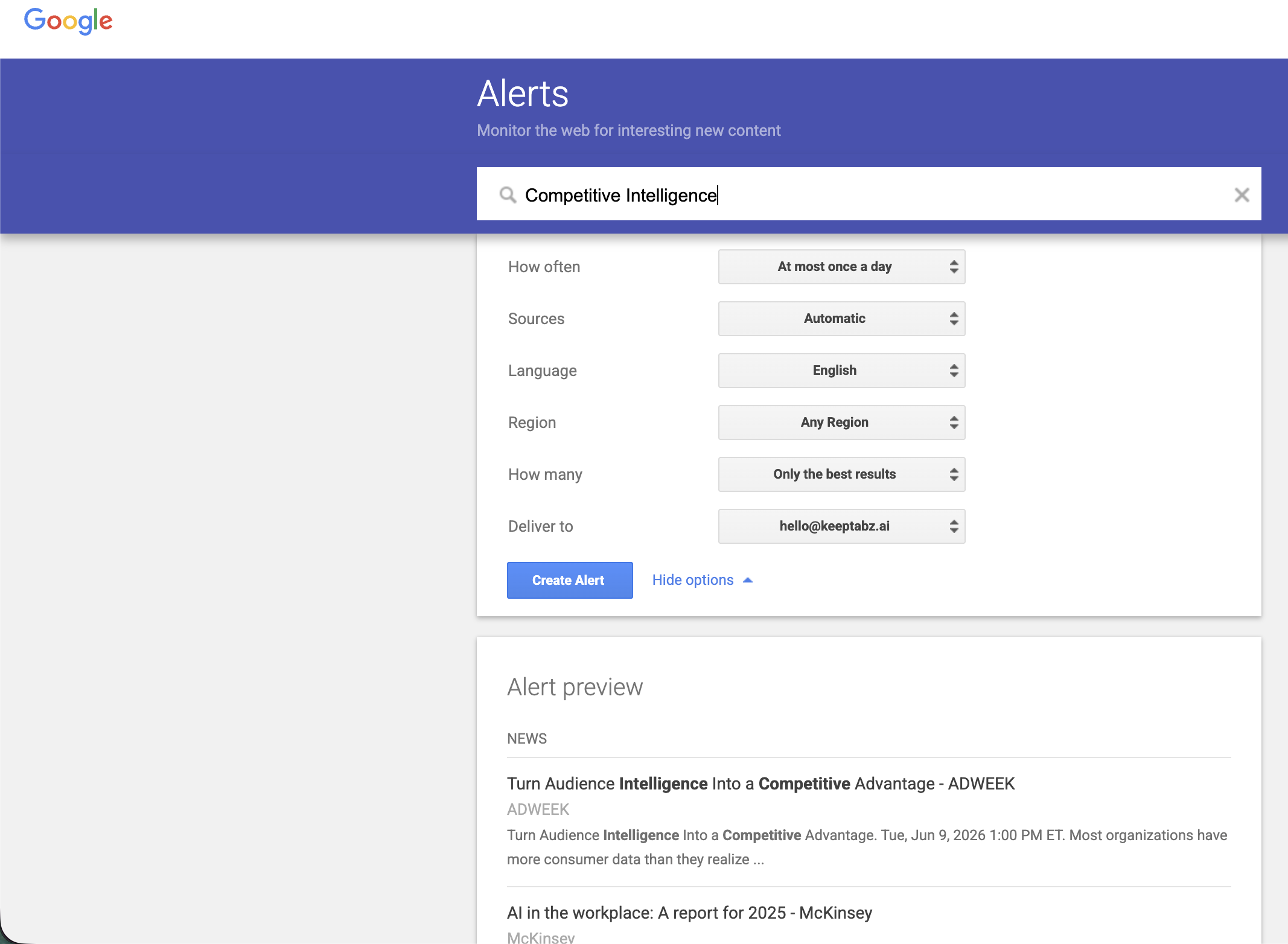
Google Alerts is the default "have you tried…" answer when a CMO asks about competitor tracking. It's free forever, runs in the background, and surfaces mentions of any keyword you set across Google's news, blog, web, and discussion indices on as-it-happens, daily, or weekly cadence. For a team with no budget and very forgiving expectations, it's a defensible starting point.
Versus AlphaSense, the gap is enormous. AlphaSense pulls from premium licensed primary sources with AI synthesis and inline rationale; Google Alerts gives you a raw, undifferentiated firehose with massive blind spots on social, review, ad, and (most importantly for the AlphaSense audience) financial-document surfaces. The honest version: third-party tests find Google Alerts misses roughly 40% of business-relevant updates and only ~10% of returned results are actually relevant to competitive tracking. It also doesn't see Reddit comments, LinkedIn posts, ad libraries, or G2/Capterra reviews — exactly the sources where most modern competitive signal actually lives.
Free forever. No paid tier.
AlphaSense is genuinely the right answer when the job is financial research — modeling markets, writing equity research, running corp dev landscape analyses across thousands of public filings. The premium pricing buys you something most tools cannot deliver: a licensed corpus of primary sources, expert call transcripts, and AI synthesis tuned to that workflow. If that's the job, nothing on this list replaces it.
But if you picked AlphaSense for competitive intelligence on B2B SaaS markets and discovered it doesn't track ads, reviews, social posts, website changes, or SEO performance — the sources where most modern competitive signal actually moves — KeepTabz is purpose-built for that work. Comparable depth on the sources AlphaSense doesn't cover. AI-driven scoring trained on real CI reasoning, with a transparent rationale on every signal. A daily digest that meets your team in Slack instead of requiring an analyst-style log-in. Roughly 1/450th the price of a typical AlphaSense + Tegus deployment. 48-hour setup. An open MCP server and API so you can plug competitive data into the AI agents you're already building.
If you've read this far, you know which slice of AlphaSense you actually need. If it's the B2B competitive intelligence slice, start a 14-day free trial of KeepTabz — Lite at $49.99/mo, Core at $99.99/mo, or book a demo with Franklin to get a guided walkthrough on your real competitor set.
Setup takes 48 hours — including a human QA check on every account before you go live. Pick your competitors, plug into Slack, Teams, or Discord, and let the daily digest do the work. Start your free trial.
⚠️ Disclaimer: This article was last updated on May 23, 2026. CI pricing, feature sets, and acquisition status change quickly — if you spot anything out of date, drop us a line at hello@keeptabz.ai and we'll fact-check and update.