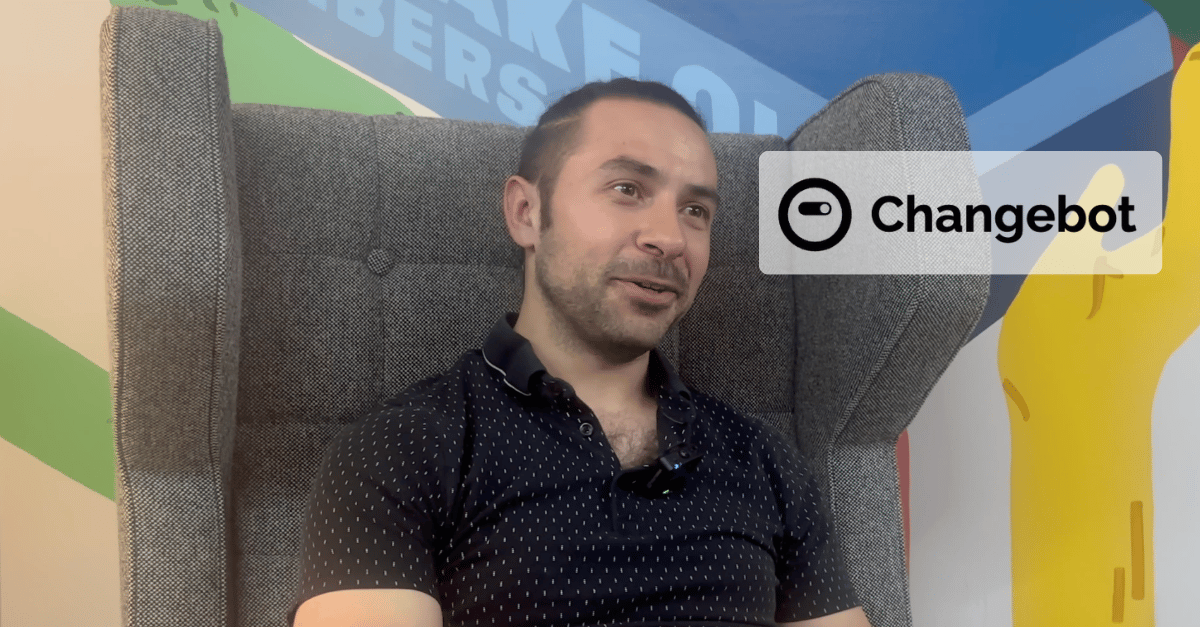
“Competitor information is actually worth a lot more than we expected.” Leon Hitchens, COO & Co-Founder @ Ruskin Consulting
Ruskin Consulting runs Google, Facebook and LinkedIn ads for about 50 small businesses and tech companies. Competitive reports used to be a cost the agency ate. Today competitor monitoring for agencies like Ruskin is something different: a reason clients stay, a reason new ones sign, and a $1,000 to $1,500 line on the invoice. Here is how Leon Hitchens, COO and co-founder, got there.
About Ruskin Consulting
Joshua Ruskin founded Ruskin Consulting in 2013. The agency is registered in Seguin, Texas, a short drive east of San Antonio, and works fully remote, with a team spread across project management, design, analytics and SEO. Leon Hitchens is COO and co-founder, with a decade in digital marketing and advertising behind him and a hand in Metronet Tag Manager, a free WordPress plugin with more than 300,000 downloads. The client list is deliberately mixed: auto mechanic shops, hydration bars, restaurants, and a handful of tech startups. “Our bread and butter is Google Ads, Facebook ads, LinkedIn ads,” Leon says, “but we also do some landing page design and SEO to make sure all those ads are really performing.” Ruskin also works as a white-label backend for other agencies. When a client’s growth plan runs through paid media, knowing what the competitor down the street is spending and saying is not optional.
The challenge
Before KeepTabz, competitive reporting at Ruskin was a grind that mostly did not pay for itself. “Competitive reporting is really hard, especially in this AI age,” Leon says. “Things are moving very, very quickly.” The data side kept breaking. “Bots were now being blocked by Cloudflare. Scraping tools were inconsistent or expensive.” And even when a scrape worked, a person still had to verify it, assemble it, and turn it into a deck a client could actually read. AI could not do that end to end, and the human hours added up.
“Getting that all together was taking a lot of time and a lot of money that really wasn’t being covered by customers in the end.”
A second problem sat underneath the first. Ruskin had offered review management for years and never sold it well, because the agency had no consistent way to monitor competitor reviews or show a client what they were up against. The upsell had no evidence behind it.
Why they chose KeepTabz
The piece that mattered most to Ruskin was not the dashboard. It was the Competitive MCP Server. “The most valuable part about KeepTabz for us is the source of truth,” Leon says. “It’s the MCP server that allows us to actually query all the data on the competitors and bring it into other sets of services.”
The agency already lived inside Google Ads, Search Console and Analytics. What it lacked was clean, current competitor data it could pull into that same workflow without running its own scraping project. KeepTabz covers the sources that block bots (review sites, ad libraries, LinkedIn, Reddit) and scores every update for competitive importance, so Ruskin queries structured data instead of raw HTML. Separate competitor sets per client fit an agency with 50 accounts. And because the data shows up on schedule, a competitive report became something Ruskin could promise a client on a date instead of something it hoped to finish.
How they use KeepTabz today
Query the MCP server from an AI assistant to pull reviews, ads and website changes for a client’s top five competitors.
Blend that with Google Ads, Search Console and Analytics data into one unified client report.
Write better ads, informed by how competitors message themselves and what their customers complain about.
Build competitor comparison pages for clients based on what competitors get praised and dinged for in reviews.
Lead with the two reports clients ask for most: review intelligence (where a client is weak and strong against competitors) and the ads report (what competitors are spending and how they position themselves in a saturated market).
Monitoring is also part of the pitch to new retainer clients. “We’re able to tell customers, hey, we’re gonna watch your top five competitors around you,” Leon says. “When they’re getting bad reviews or when they increase prices, you’re gonna be able to flex and actually make impact on them because we’re monitoring it before you even know about it.”
The results
Per-report pricing rose from $300 to $500 to $1,000 to $1,500, depending on complexity.
Review management, a service Ruskin had offered for years without traction, now sells on the strength of competitor review data.
Competitor pages became a second new service line: “You want to rank for these competitors, this is the easy way to do it.”
Competitor monitoring is now a retention lever for retainer clients and a selling tool for new ones.
Almost every client who has bought a report has come back with a business improvement they credit to the agency.
For a 50-client agency, that is a new margin line built on data Ruskin was already trying, and failing, to collect by hand. Clients pay the higher price because Leon tells them plainly that the reports are AI-assisted and that the underlying data is what costs money. They keep paying because the reports change what they do next.
“Almost every single person that has paid for these reports has come away with a lot of information and then also been able to improve their business and say that there is real impact from our agency.”
What’s next
Leon is direct about the alternative. “If KeepTabz disappeared tomorrow, I think we would definitely have some heartache.” More people to hire and manage, scrapers throttled by everything from Reddit to LinkedIn, and costs that would climb until “it just wouldn’t make economic sense for us to keep providing these reports to customers in the time frames that we do.” The plan instead is to push competitor data deeper into the work: more competitor pages, more ad copy written off competitor messaging, and a review-management line that grows with the monitoring behind it.




.png)
.png)